Welcoming the rain, we learn, is an even greater joy than receiving the Torah.
R. Tanhum b. Hiyya teaches: "While the giving of the Law was a joy only
to Israel, the falling of the rain is a rejoicing for all the world, including
the cattle and the wild beats and the birds."[*]
The rain, bringing joy in its presence and despair in its absence, is a reminder
of man's vulnerability and of the brotherhood of all mankind.
We celebrate the Hebrew month of Heshvan which brings the rains to the Land
of Israel, by studying the topic "Rain" in Jewish sources. This feature
discusses the theological implications of a land
which depends on rains from the heavens (unlike Egypt) and the symbolism
of rainfall as regards divine providence and edification. We share with
you Biblical sources relating to the blessing of "rains in their season";
Talmudic perspectives on the source of the rains;
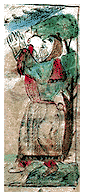
the famous story of Honi the Circle Drawer , the miracle
worker who brought the rain; and several midrashim that teach the equality
of all men -- under the rain.
Poems
by medieval poets Solomon ibn Gabirol and
Moses Gabbai celebrate and invoke the rain,
and a modern verse by Polish poet Wislawa Szymborska
moves the Genesis flood story beyond the physical confines of ark and
animals. Julius Greenstone explains the origins and development of Tefillat
Geshem, the Prayer for Rain.
"Give
dew and rain for a blessing upon the face of the earth..."
(Ancient petition for rain recited as part of the daily prayers during
the winter months, up until the first day of Passover)
As we observe the
drought and famine continuing to plague large portions of our world, we pray
that the dew and the rains of Heshvan and the winter months that follow be for
a blessing upon the face of the earth.







 Poems
by medieval poets
Poems
by medieval poets 

